
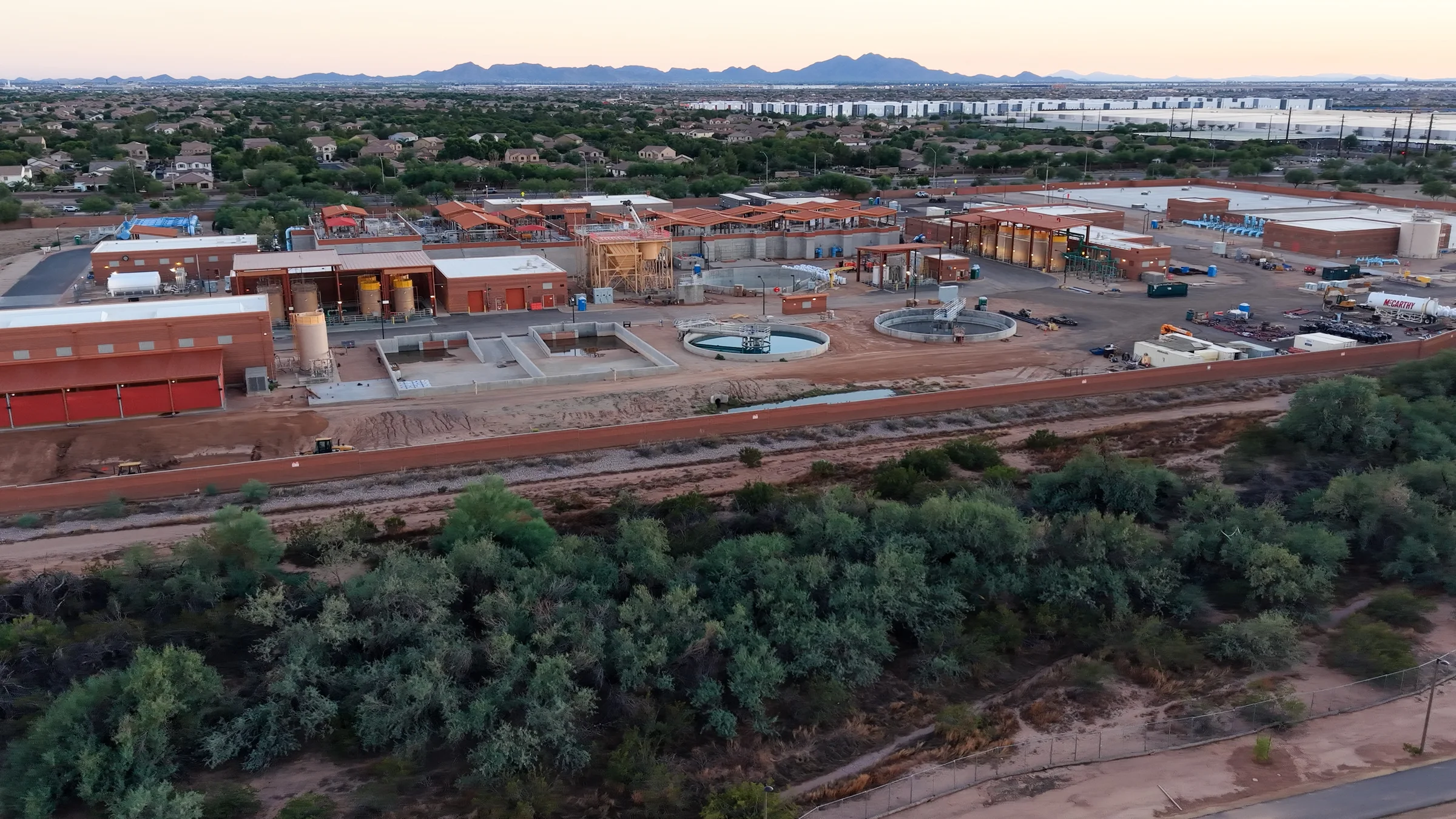
The red-roofed complex with large circular basins at the northeast corner of Elliot Road and Signal Butte Road in Mesa is the Signal Butte Water Treatment Plant. It helps turn Colorado River water into drinking water for the city, and a major expansion is designed to double its treatment capacity.
From above, the site is hard to miss: rows of covered equipment, concrete basins, pipes and construction machinery sit beside a belt of desert vegetation. The photos accompanying this article offer a closer look at a piece of southeast Mesa infrastructure that usually stays in the background of everyday life.
What does the Signal Butte Water Treatment Plant do?
According to Mesa’s water treatment overview, the plant receives Colorado River water delivered through the Central Arizona Project. Its treatment process includes ozone disinfection, and it is one of three water treatment facilities serving Mesa.
The city currently lists Signal Butte’s treatment capacity at 24 million gallons per day. Capacity describes how much water a plant can treat; it does not mean that amount is produced every day. Mesa’s treatment plants operate under state and federal drinking-water standards, with operators certified by the Arizona Department of Environmental Quality.
Why is Mesa expanding the plant?
The central change is substantial: the project will increase treatment capacity from 24 million to 48 million gallons per day. Mesa’s July 2024 council agenda record describes the added treatment facilities and explains that the reservoir work supports growing demand, provides backup within the distribution system and helps during high-demand months.
That increase was anticipated from the start. Sundt’s announcement of the original plant’s completion in 2018 says the facility was designed to accommodate an eventual 48-million-gallon-per-day capacity. The construction now visible is part of that planned expansion.
For residents, the practical distinction is between the water itself and the infrastructure needed to handle it. More treatment capacity helps the city process water for customers; adding equipment does not, by itself, create a new source of river water.
What is being added?
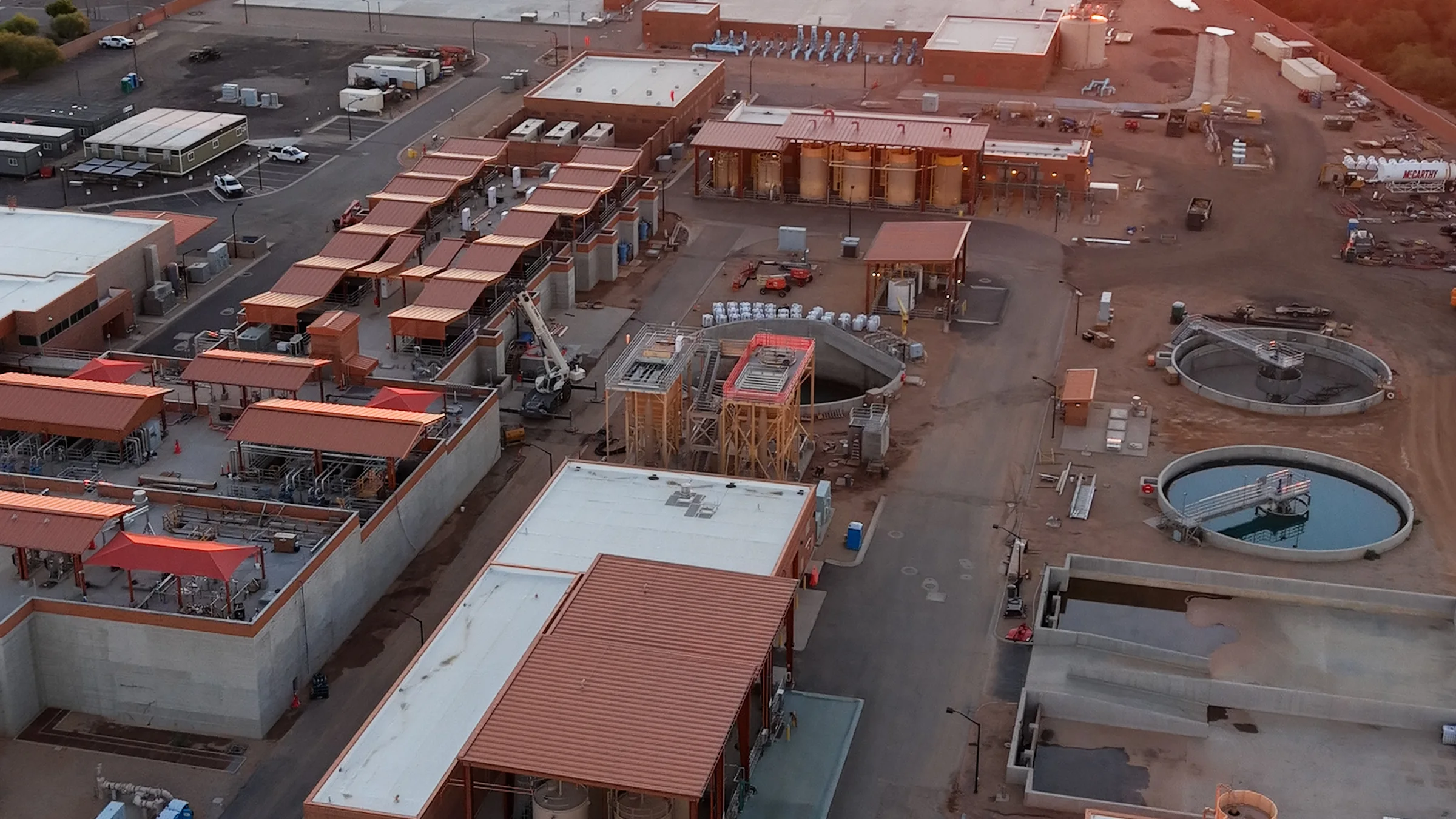
In a January 23, 2026 project update, general contractor McCarthy announced completion of a new 8-million-gallon drinking-water reservoir. The company identifies Black & Veatch as the expansion’s engineer and says the work is phased to maintain plant operations.
The treatment expansion also includes six additional filters, added disinfection equipment and improvements for handling material removed during treatment. The reservoir adds storage, while the treatment equipment increases how much water the plant can process each day. Those are different jobs within the same system.
When will the expansion be finished?
Published schedules point to 2027, but they do not give one consistent completion month. McCarthy’s January update projected October 2026 for Phase I and early summer 2027 for Phase II. A draft city financing document dated April 30, 2026 instead lists February 2027 for completion of expansion construction.
These are published projections, not a confirmed completion announcement. The reservoir milestone also does not mean the entire expansion is finished. As of this article’s September 28, 2026 research check, a single final completion date has not been verified.
What should Signal Butte Park visitors know?
The nearby public park has a separate construction notice. Mesa’s Signal Butte Park page says the east construction area next to the plant is closed until December 2026 and states that the closure does not affect park amenities.
The park is listed at 11132 E. Elliot Road, with a playground, splash pad, ramadas, restrooms and a 1.5-mile walking loop. Check the city’s park page and posted signs for current access information before heading out; the park’s closure schedule is separate from the water plant’s expansion schedule.
A closer look at a changing Mesa intersection
For nearby Eastmark residents, this is infrastructure just beyond the neighborhood’s edge. Mesa’s Eastmark Community Plan places the community south of Elliot Road between Ellsworth and Signal Butte roads.
The intersection is also drawing attention for its commercial changes. For another view of what is taking shape nearby, read East Valley Explorer’s report on Oregano’s at Signal Butte and Elliot.
The water plant gives those familiar cross streets another layer of meaning: behind the red roofs is part of the system that makes daily life in southeast Mesa possible, from a morning shower to a glass of water at dinner.
